MAIN GOALS
The main goal of the research carried out by the department is to increase the efficiency of prospecting and exploration, expand the mineral resource base of the Republic of Uzbekistan, and conduct large-scale geological and geochemical studies on the territory of the republic.
Based on this, the main tasks of the department are:
Comprehensive assessment of the mineral resource potential of the mountainous and foothill regions of southern Uzbekistan and the Molguzar mountains based on the creation of multipurpose predictive geological and geochemical maps on a scale of 1:100000;
Development of requirements for the technology of preparatory, field, cameral and analytical work, for data banks, reporting materials, including a set of final geochemical maps, within the framework of multipurpose geochemical mapping at a scale of 1:100000;
Comprehensive analysis of basic geological materials for mining areas and regions, as well as deposits and manifestations of precious metals, within which they are developed;
Study and establishment of regularities in the placement of industrial deposits of precious metals and other objects in various geological settings, taking into account the results of the work of production organizations;
Development and improvement of methods, criteria for prospecting and evaluation of precious metal mineralization.
Allocation of new favorable positions, areas (plots) for precious metal and other mineralization;
Creation of digital multi-purpose geological and geochemical forecast maps based on GIS technologies;
Approbation and evaluation of predictive constructions, and their implementation in the production of geological exploration work of field expeditions
SCIENTIFIC RESEARCH
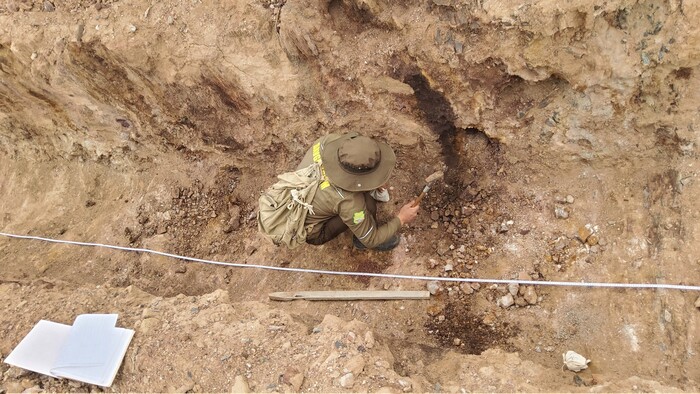
Multipurpose geochemical mapping of the mountainous and foothill regions of Southern Uzbekistan and the Molguzar Mountains at a scale of 1:100,000 using modern analytical methods and rational technologies for their implementation.
Estimation of the prospects of sulfided zones of the Kospaktau Mountains for non-ferrous metals (Au, Ag, Pt) and associated mineralization.
Study of the mineralogical, petrographic and geochemical features of gold and other minerals at the Cholcharatov promising deposit and assessment of the prospects of the Tortkuduk mine in the northwestern part of the Bukantau mountains.
Study of the geological-structural and mineralogical-geochemical characteristics of gold and other mineral formations of the Sarijoy deposit in the southeast of the Bukantau mountains (sections Sarijoy and Dzhetymtau-2).

RESULTS OF SCIENTIFIC RESEARCH
Guidelines for multi-purpose geochemical mapping of the MGChM-100 have been developed.
The contours of potentially promising areas with an anomalous content of elements are identified. An assessment of the nature of anomalous geochemical fields is given according to the data of geochemical studies carried out on the territory of the Malguzar Mountains.
The identified geochemical anomalies are classified according to the direction of specialization, ranked according to the hierarchical level, which will serve as the basis for the future geochemical forecast map.
Gold mineralization has been established at the Kospaktau site, which has a vein-disseminated type and is concentrated in a volcanogenic-siliceous-shale complex, forming complex deposits with vein-disseminated ores.
Ore mineralization in the area is confined mainly to terrigenous and volcanogenic-sedimentary complexes, where it develops against the background of a wide range of mineral neoformations associated with zones of shearing, crushing and brecciation.
A mineralogical and petrographic study of deep wells (MС-5, MС-9) drilled on the eastern flank of the Muruntau ore field was carried out. Numerous ore intervals have been discovered, including those with high gold grades. Most of them are confined to the productive level of the “variegated besapan”. Data obtained from the surface and other wells drilled in the ore field indicate that these wells have opened independent ore deposits separated from the Muruntau stockwork by a barren area.
A statistical analysis of 750 samples was carried out for the Bulutkan site, statistical parameters were determined. Correlations of elements were calculated: a negative relationship between gold and titanium was revealed.
Statistical analysis of 773 samples was carried out at the Chalcharatau site. Correlations of elements were calculated: a relationship of gold with vanadium, nickel, tin, tungsten, zinc and chromium was revealed.
Statistical analysis of 849 samples was carried out for the Turtkuduk site. Correlations of elements were calculated: a connection was established between gold and tantalum and niobium.
Aureoles of gold, arsenic, silver, antimony, copper and molybdenum are built in all areas.