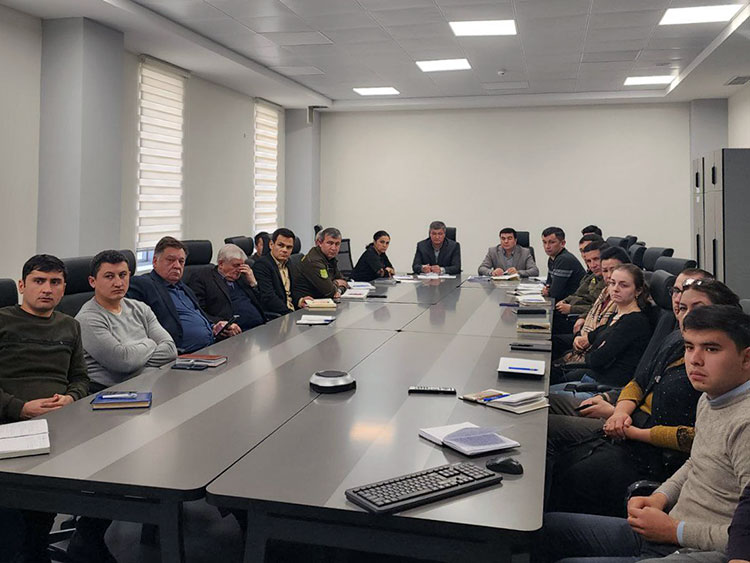
A meeting was held under the leadership of the director of the Institute of Mineral Resources Kholikov Azimjon Babamuratovich to conduct explanatory work in the field of combating corruption, increase their legal awareness and culture, and form an uncompromising attitude towards corruption among the employees of the Institute of Mineral Resources.
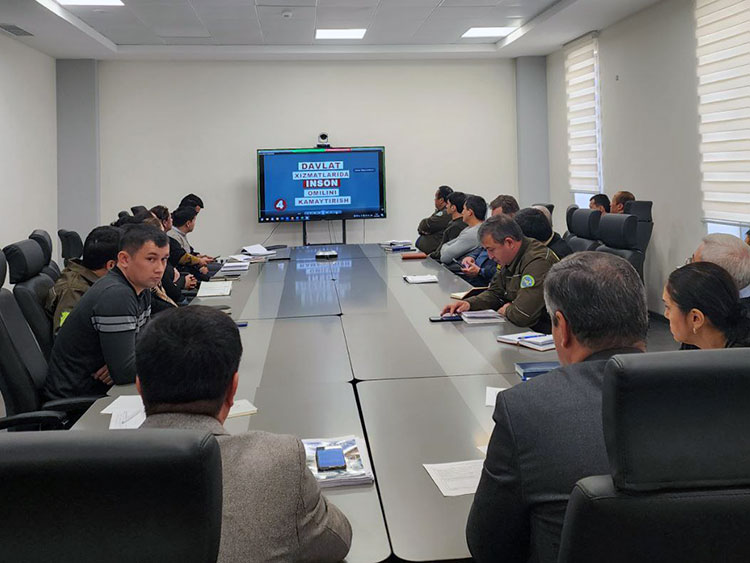
The main principles of the fight against corruption were announced on the agenda as follows:
The state enterprise and its territorial structures implement an anti-corruption system based on the following principles:
- legality - the state enterprise and its territorial bodies take measures to combat corruption, taking into account the requirements of the legislation of the Republic of Uzbekistan, taking into account the internationally recognized practice of combating corruption in state bodies, and in accordance with the internal documents of the state enterprise;
- intolerance to corruption - a state enterprise and its territorial structures are intolerant of any forms and manifestations of corruption in all areas of their activities.
Employees of a state enterprise and its territorial structural structures are prohibited from directly or indirectly participating in activities that may create corruption risks;
- openness and transparency - informing the general public about the measures taken and implemented in the field of combating corruption in a state enterprise and its regional structures and counterparties;
- prevention, consistency and interdependence of implemented measures to combat corruption - priority is given to the implementation of preventive measures aimed at eliminating the causes and conditions that contribute to the commission of corruption and corruption risks by a state enterprise and its regional structural structures;
- Anti-corruption measures and procedures correspond to the level of identified risks and are integrated into the anti-corruption system, integrated into all functions and areas of the state enterprise and its territorial structures;
- inevitability of liability for corruption offenses - employees of the agency and organizations in its system who have committed corruption offenses are liable in accordance with the agency's internal documents and current legislation, regardless of their status and position;
- the use of technological development achievements - a state enterprise and its territorial structural structures strive to use the latest achievements of scientific developments, including integrated information systems, when creating an anti-corruption system;
- direct appeal to the management - each employee of the state enterprise and its territorial structural structures can freely apply to the head of the structural structure and the director of the state enterprise to take the prescribed measures if there is reliable and reasonable information about the commission of corruption offenses;
- mutual cooperation with representatives of civil society - a state enterprise and its territorial structures involve representatives of civil society for the purpose of independent control on the basis of honesty, impartiality and independence in the performance of their functions;
- continuous improvement of the anti-corruption system - based on the results of monitoring and control of the anti-corruption system and the implementation of corruption risks, measures will be taken to constantly improve the efficiency of the anti-corruption system at the state enterprise and its territorial structures.
This policy is an internal regulatory document of the Committee, and the principles and requirements of this policy are binding on all employees, regardless of their position.
In addition, when giving or accepting any gift or business hospitality, community officials must evaluate the potential risk of creating a risk of corruption or being perceived as an undue benefit. For the avoidance of doubt, on personal holidays not related to employee duties, gifts made by employees to other employees are treated as personal employee gifts and are not regulated or prohibited by this policy. However, when giving and accepting such gifts, employees should ensure that they do not create a risk of corruption.
It is emphasized that business gifts and signs of business hospitality must comply with the requirements of the legislation of the Republic of Uzbekistan, the Anti-Corruption Policy of the Committee, the Code of Ethics and other internal regulatory documents of the company, and gifts should be issued only by the heads of structural divisions.
The speaker said that giving gifts to civil servants of the Republic of Uzbekistan is prohibited.
In addition, the cost of presenting signs of business gifts (within the framework of one event) is 5 (five) minimum remuneration for senior management of the counterparty and 3 (three) minimum remuneration for heads of departments directly subordinate to the top management of the counterparty, should not exceed 2 ( two) minimum wages for other employees of the counterparty.
At the same time, the participants of the meeting were familiarized with the rules for receiving and presenting gifts. In particular, the number of gifts given to civil servants of Kyrgyzstan, Tajikistan, Russian Federation, Belarus, Georgia, Moldova and Ukraine was recorded. At the same time, it was noted that in Singapore and Kazakhstan it is strictly forbidden to give or receive gifts, although there are no requirements prohibiting the receipt or giving of gifts in the criminal legislation of Switzerland and France, this is regulated by separate rules, and limits on giving gifts in Turkmenistan are not set at all.
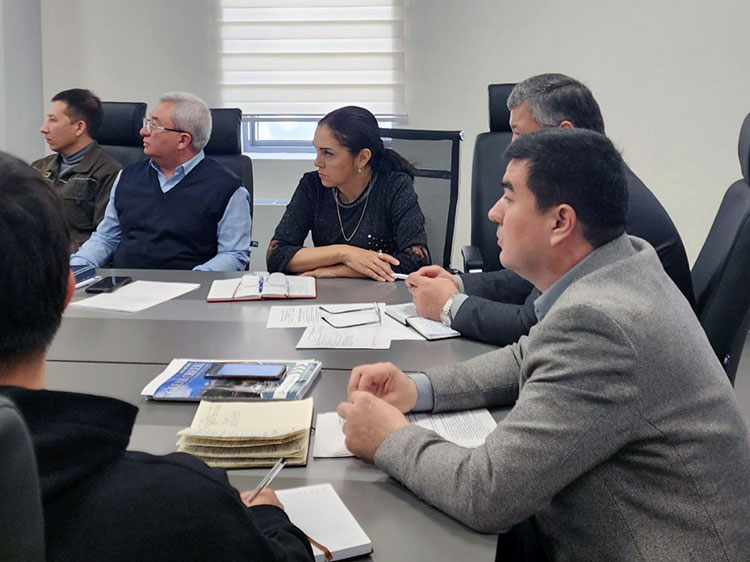
In addition, during the lecture, the organization of business events and the procedure for making hospitality expenses were explained in detail.
He answered several questions from participants on the topic of the agenda.