
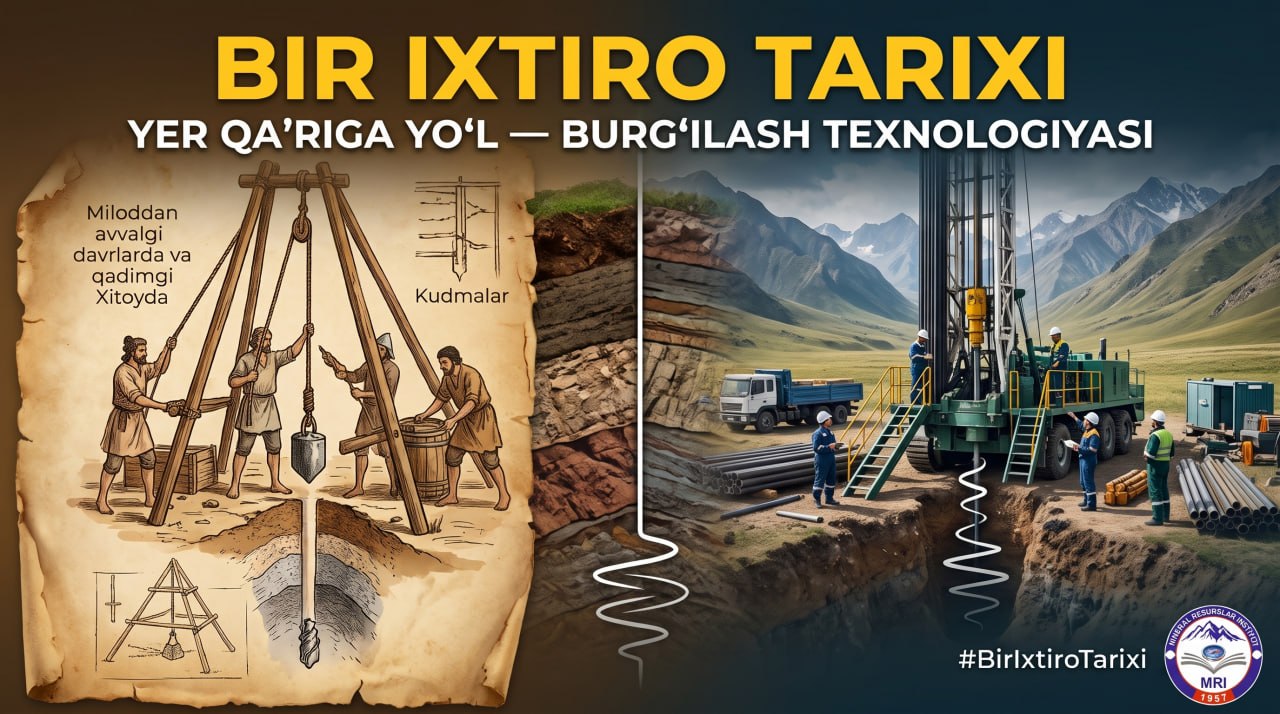
Today, it is impossible to imagine the discovery of underground resources, the search for deposits and geological analysis without huge drilling rigs. When and how did humanity begin to penetrate deep into the earth's bowels?
Historical discovery: Bamboo and stones The first manifestations of drilling technology appeared in ancient China in the 3rd century BC (more precisely, in the 3rd century BC). People of that time invented the first drilling methods to extract natural salts, water, and later combustible gases from the ground.
They used long, flexible bamboo pipes, ropes, and percussion hammers made of heavy metal or stone. With the help of human power or animals, this heavy hammer continuously hit the ground, crushing rocks and forming wells. This was the first "percussion drilling" in history (percussion-rope drilling) and at that time it was possible to go down to a depth of hundreds of meters!
The Industrial Revolution and Rotary Drilling By the 19th century, drilling operations had changed radically due to the development of industry and the need for oil. In the 1900s, the rotary (rotary) drilling method and later special auger drills (augers with augers) that crushed underground rocks were invented. This technology increased drilling speed tenfold and made it possible to study the depths of the earth to a depth of several kilometers.
What about today? Today, the Mineral Resources Institute (MRI) uses modern, automated and high-precision drilling equipment in geological exploration. "Kern" (rock samples) taken from modern wells are subjected to in-depth chemical and geophysical analysis in laboratories, and the exact reserves of underground resources are calculated.
This simple idea, which began with ordinary bamboo and rope, today allows humanity to discover inexhaustible treasures in the depths of the earth.
Follow our channel, next week you will get acquainted with the history of another interesting invention!