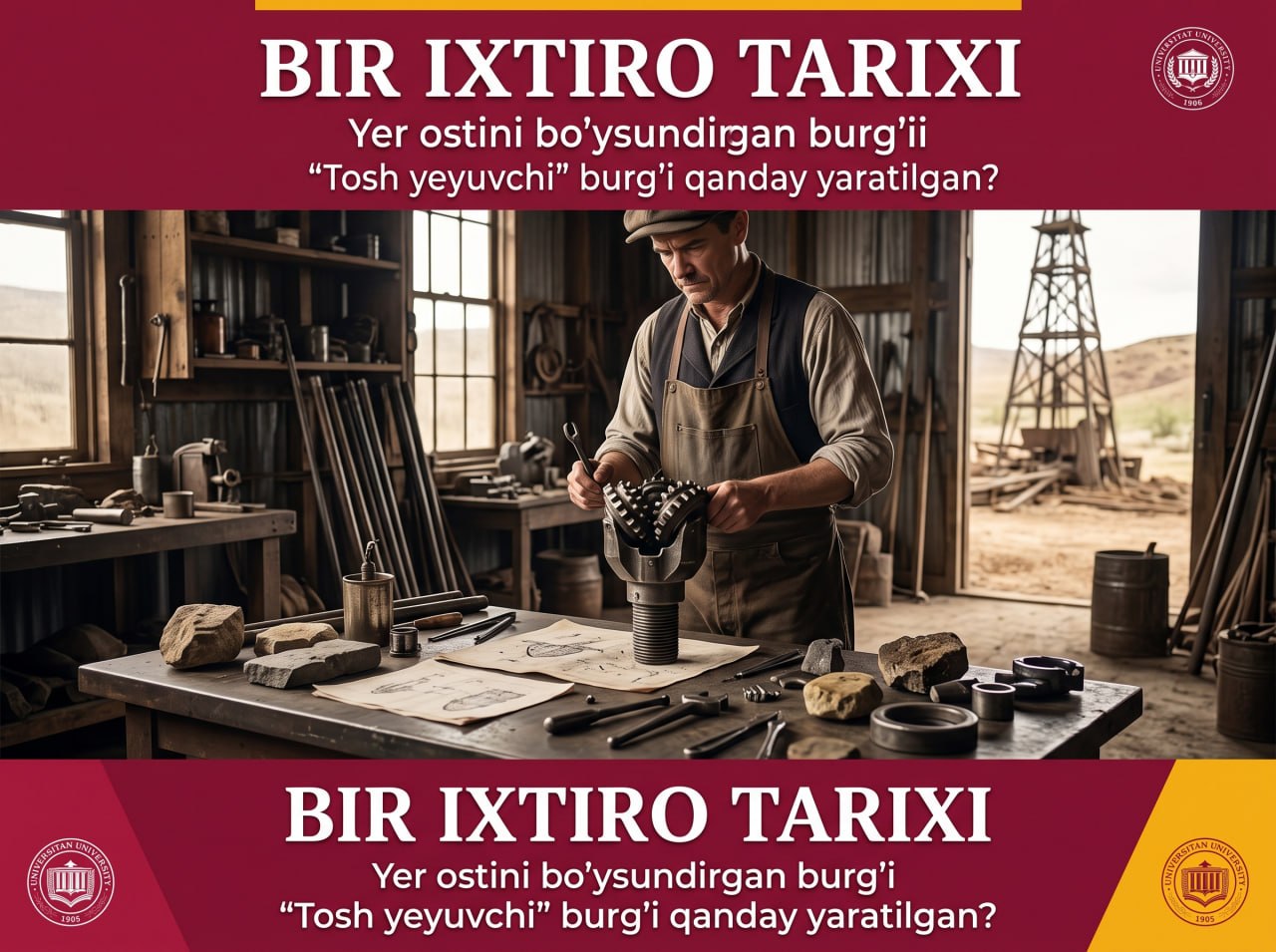
How did it work? The tip of the drill was equipped with movable toothed cones, which, in addition to the general rotation of the equipment, also rotated around their own axis. Sharp metal teeth crushed and gnawed hard rocks like a mill. This miracle quickly earned the nickname "rock eater" among drillers due to its efficiency.
A revolution in geology:
This discovery revolutionized geology, mining, and the oil and gas industry. Wells that used to take weeks to drill into hard granite or basalt rocks can now be completed in a matter of days. Today, modern tri-cone bits used in geological exploration and mineral exploration across our country operate on the same principle as this 115-year-old invention!
Science is capable of overcoming any "insurmountable" obstacle through human understanding. What other inventions do you think could revolutionize modern geology?